We study the future of learning
and how technology can advance
human development.
About the Future of Learning Lab
We study the future of learning and how technology can advance human development. The Future of Learning Lab at Cornell University explores how technology, data, and human-centered design can transform education. Our research bridges the fields of AI in education, learning science, and behavioral science to improve teaching and learning at scale.
News
Subscribe
to our newsletter and stay in the loop with our lab!
Tell us more about your interest in collaborating with the Future of Learning Lab.
Please use
this form
to share more about your background and interest in the lab. We will review submissions and respond on a rolling basis whenever there is a good fit with a new or ongoing research project.
Follow us on LinkedIn
for updates on our work and opportunities.
Our Mission
The way people learn is changing. The Future of Learning Lab is committed to advancing our understanding of the impact of technology in education and how it can contribute to advances in human development and benefit society. We investigate pressing questions about the effectiveness and impact of digital learning environments, from online courses and tutoring systems to AI-powered educational tools. Our work leverages large-scale data analysis, randomized experiments, and qualitative insights to understand how learners engage, persist, and succeed in diverse educational settings. A key focus is identifying and addressing disparities in educational access, engagement, and outcomes.
Our research aims to be actionable for practitioners and policymakers, as we study educational technologies and the people who use them out in the world through big data and randomized experiments. To this end, the lab engages in numerous collaborations with education providers to design and implement studies that answer shared research questions. The Future of Learning lab takes a multi-disciplinary approach that builds on theories and methods in the learning sciences, cognitive and social psychology, human-computer interaction, economics, and statistical learning. We are committed to open science practices and to promoting diversity in the field.
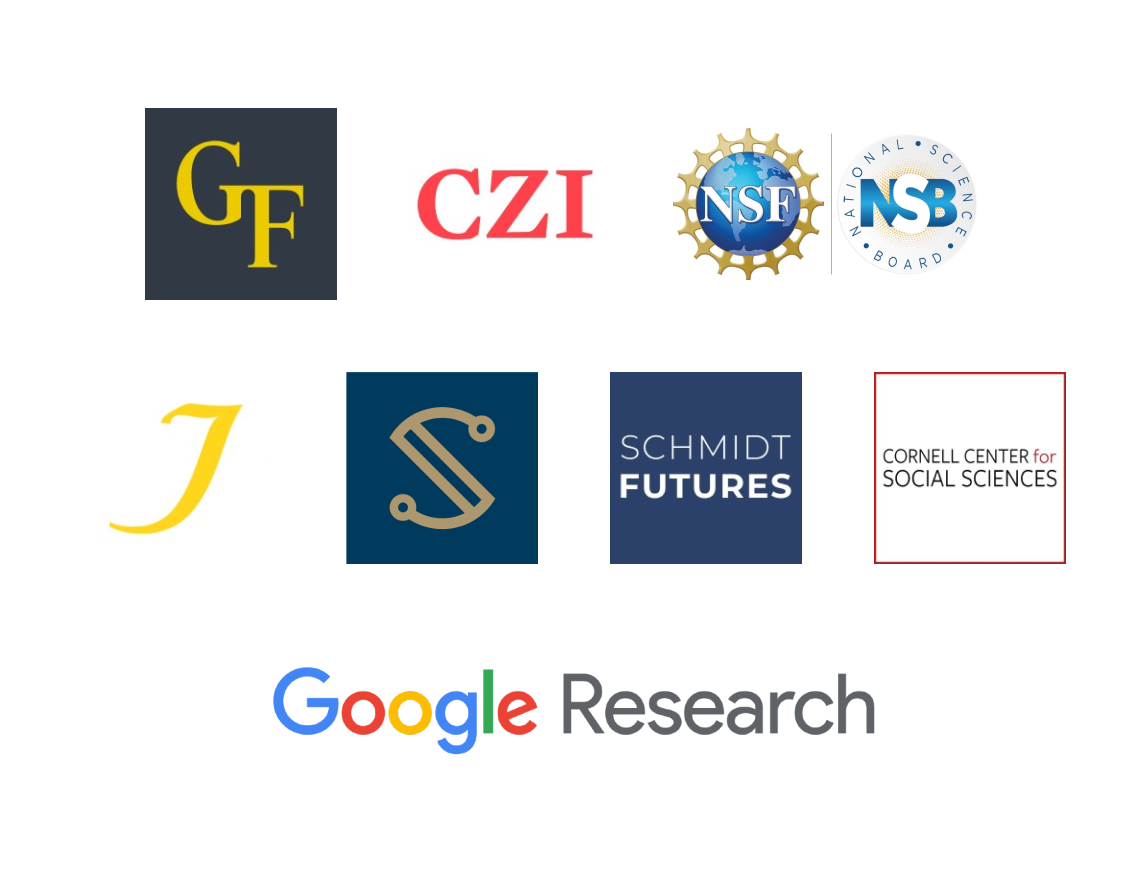
Our Supporters
We are grateful for the generous support of our sponsors that make our work possible. Any opinions, findings, and conclusions or recommendations expressed in this material are those of the authors and do not necessarily reflect the views of the funders.